
 UKR
UKR RU
RU SK
SK


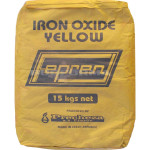
Today, you can make the courtyard of your house, a country fence, or the tile paving of an entire avenue unique. Concrete dye diversifies the mundane gray tones of urban landscapes. Pigment coloring technologies and the properties of the color-imparting composition allow the new original concrete to retain its attractiveness and not wear out over time.
Iron oxide pigment is the most durable option. It contains only inorganic components and produces various shades. A feature of iron hydroxides and oxides is their chemical inertness. They are insoluble in water, oils, organic acids, and alkalis, which is a significant plus for their use in concrete compositions. The durability and indestructibility of the colorant in the light can be judged by the fact that it is used to color printer inks. Iron oxide pigment, the use of which has spread due to the abundance of its color palette, has the property of retaining its color well and not fading.
The effectiveness of its addition to increase the binding characteristics of the material and improve strength has been proven. Colored concrete reacts better to temperature extremes and does not fade. Green fences and blue fountain figures do not lose their monolithicity and color. Paving slabs near an office or shop, made with a combination of black, yellow, and red elements, will not lose their brightness for many years. Brown fences and columns will not crack even when heated under the scorching heat and will remain the same.
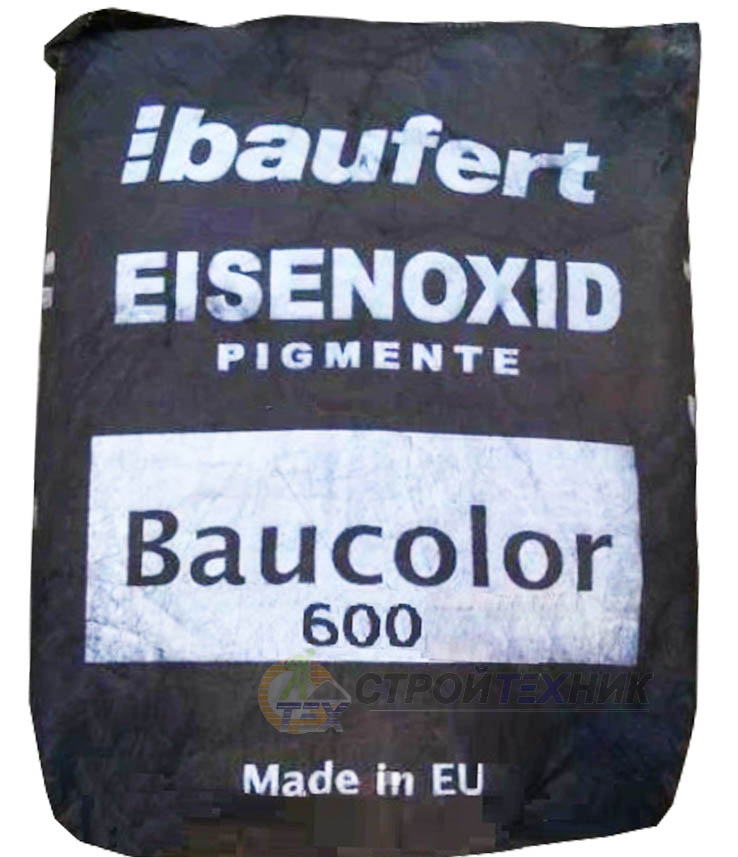
How to Make Colored Concrete
Dissolved dye is often introduced directly into the concrete mixture composition; this method is economically justified when manufacturing products subject to stable long-term loads. In such cases, concrete additives will also be needed to impart the required characteristics.
However, for decorative stone and garden tiles using iron oxide pigment, consumption can be reduced. It is sufficient to color the face layer and, observing technological subtleties, lay it on a 2 cm thick concrete base. If the scale of work is small, the mixing is done manually; for industrial production, 2 concrete mixers will be needed.
Compliance with proportions when calculating the structure of the future composition is important. General recommendations for the percentage of dye content are: not less than 3% and not more than 15%. When purchasing pigments from the "Stroytekhnik" company, carefully read the instructions on the package. Deviation from these norms is fraught with a decrease in frost resistance, the appearance of cracks, or loss of color.
The coloring pigment is never added to the concrete mortar dry. The question reasonably arises: what to dilute the iron oxide pigment with if it is insoluble in water. The answer lies in the fine dispersion of the powder. Upon thorough mixing with water until a homogeneous state is reached, a suspension is formed, which distributes perfectly throughout the mass; it is added along with plasticizers.
If the listed requirements are met, colored concrete with high lightfastness and strength is obtained.
13/12/2021