
 UKR
UKR RU
RU SK
SK


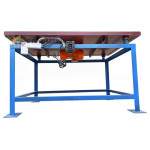
Vibration table technology plays a key role in the production of ABS plastic
fence moulds for concrete products. These innovative devices are able to ensure
uniformity and high quality of manufactured products. In this article, we will
consider how vibrating tables affect the process of production of moulds for
fences and how to ensure maximum efficiency of the use of this technique.
The basic principle of vibration tables is that they create vibrations
transmitted to the concrete mix in the mould. This allows the mixture to better
fill all corners and cavities of the mould, eliminating air bubbles and
irregularities. Uniform vibration ensures a homogeneous concrete structure
throughout the entire volume of the product.
Importance of vibrating tables in the production of moulds for fences
Vibration tables are an integral part of the production process of ABS
plastic fence moulds. They ensure uniform distribution of material in the
mould, leading to a homogeneous and high-quality final product. This process is
especially important for concrete products, where the uniformity of the
structure and density of the material is crucial for the strength and
durability of the fences.
Technical characteristics of vibrating tables
Vibration tables have a number of technical features that make them
effective in the production of fence moulds. One of the key aspects is the
adjustable vibration frequency, which allows precise control of the compaction
of the material in the mould. This ensures that the vibrating tables can be
adapted to different types of moulds and the requirements of the products to be
manufactured.
Advantages of using vibrating tables
The use of vibrating tables in the production of ABS plastic fence
moulds brings a number of significant advantages. Firstly, it improves the
quality of the final product by ensuring the homogeneity and density of the
material. Secondly, it increases the productivity of the process by reducing
moulding time and increasing the speed of material compaction. In addition,
vibratory tables reduce mould maintenance and repair costs by reducing wear and
damage.
Optimising the use of vibrating tables
In order to maximise the efficiency of vibrating tables in the
production of fence moulds, it is necessary to correctly adjust their
parameters to the requirements of the products to be manufactured. This
includes optimum vibration frequency, correct load distribution and regular
maintenance. In addition, it is important to ensure that personnel are trained
in the correct use and care of the vibrating tables.
Vibration tables play an important role in the production of ABS plastic
fence moulds for concrete products. Their use helps to ensure uniformity and
quality of manufactured products, increase process productivity and reduce
maintenance costs. Optimal setup and regular maintenance of vibration tables
are key factors to maximise the efficiency and longevity of this technique in
the production of fence moulds.
16/02/2024