
 UKR
UKR RU
RU SK
SK


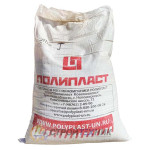
Hardened concrete becomes strong if there are no voids in it. Decent quality can be achieved at the installation stage if you buy a plasticizer for concrete. Its effect when added to the working mixture lies in reducing the amount of diluent, because water is precisely what is responsible for the appearance of air pores that subsequently lead to cracks. The plasticizer will make the mortar workable and easy to form, so this problem can and should be avoided. The "Stroytekhnik" company website features liquid and powder modifications of plasticizing additives.
The use of plasticizers for concrete can enhance specific characteristics, reduce them, or be aimed at comprehensive improvement.
Which plasticizer for concrete is better
There are universal types of superplasticizers; they are popular and solve many builders' issues. But for systematic application, it is preferable to buy concrete additives created for specific directions.
For example, positions for increasing waterproofing are provided for foundations. The addition of plasticizers with antifreezing properties will be required for work in low-temperature conditions. If the goal is rapid concrete setting, hardening accelerators are used, while retarders are created to achieve the opposite result. When arranging a "warm floor" system, screed mixtures are in demand, which increase heat transfer, provide a flat surface, and allow reducing the layer thickness without loss of strength.

Plasticizers for concrete, types based on composition
Ukrainian and foreign manufacturers use components that vary in chemical composition. The decisive factor in selection is the purpose for which the plasticized concrete will be used:
Features of using plasticizers for concrete
- for finishing works, compositions of the silicone or similar polymer group are used; they are odorless and environmentally safe;
- for priority in reducing cement consumption, water resistance, and time-extended transportation, lignosulfonates and naphthalene sulfonates are mainly used;
- for large-scale construction, the emphasis is on polycarboxylate, which is a highly effective hardening retarder.
How to use a plasticizer for concrete
Unplasticized concrete is prepared in small portions, which takes extra time. The improved structure allows working with large volumes and reduces vibration compaction time. Due to this, construction schedules are significantly reduced.
The question remains as to what quantity of plasticizer for concrete to add; the consumption is clearly indicated on the packaging, and there is no need to experiment. If the additive is liquid, then when working with floors and wall ceilings, the figures range from 0.5 to 1 liter per 100 kg of base. For foundations, the proportions need to be increased; they will amount to 1-2 liters. If you purchase a loose mixture, you can determine the plasticizer consumption by calculating it as 0.5-1%; the figure depends on the grade of cement used.
13/12/2021