
 UKR
UKR RU
RU SK
SK


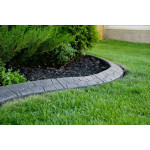
ABS plastic kerb moulds are becoming increasingly popular with
landscapers and homeowners. They make it possible to create aesthetically
pleasing and durable landscape elements that add the finishing touch to any
garden or yard.
Preparation of mould and concrete
Before starting work, it is important to make sure that the kerb moulds
are clean and undamaged. If the moulds have been used before, they should be
thoroughly washed and dried. To improve the removal of the finished product,
the inner surface of the mould can be treated with a special grease for
concrete.
Properly prepared concrete is the key to a quality kerb. To create a
strong and durable product, it is recommended to use a concrete mix of at least
M300 grade. The optimal consistency of concrete should be plastic, but not too
liquid to avoid deformation of the kerb after pouring.
Pouring and vibration
Once the mould and concrete have been prepared, the pouring can begin.
The concrete should be poured evenly, filling the mould in stages. To avoid
voids and air bubbles, it is important to vibrate the concrete. This can be
done using a special vibrator or light tapping on the sides of the mould.
Vibration improves the density of concrete and increases the strength of the
future kerb.
Concrete maintenance and extraction
After pouring the concrete, it is important to ensure the conditions for
proper curing. It is recommended to cover the mould with polythene or a damp
cloth to avoid rapid evaporation of water and to prevent the concrete from
cracking. The setting process usually takes 24-48 hours, but for maximum
strength it is better to wait at least 7 days.
Removing the border from the mould requires care. To avoid damaging the
product, the mould should be carefully disassembled starting from the edges. If
the mould is properly lubricated, the border should come off the mould easily.
Use of borders in landscape design
Curbs play an important role in creating a harmonious landscape design.
They can be used to separate flowerbeds from lawns, design paths and create
multi-level compositions. It is important to take into account the colour and
texture of the borders when placing them, so that they harmoniously fit into
the overall style of the site.
When installing the kerbs, it is necessary to make sure that they are
installed on a solid base. For this purpose it is recommended to prepare a
trench in advance, lay a layer of sand or gravel and then install the kerbs,
fixing them with concrete mixture.
ABS plastic kerb moulds are a great tool for creating beautiful and
durable landscaping. By following simple rules for preparation, pouring and
maintenance of concrete, you will be able to create kerbs that will serve you
for many years, giving your site a well-maintained and finished look.
Stroytechnik offers a wide range of quality kerb moulds to help you realise any
design ideas.
27/08/2024