
 UKR
UKR RU
RU SK
SK


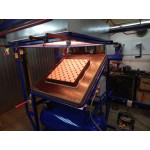
Vacuum forming is a popular method of creating plastic products. This
process is particularly in demand in the production of moulds for concrete
products. In this article we will look at the main stages of making vacuum
forming models and give useful tips to help you achieve the best results.
Steps in the production of vacuum moulding models
Design development. The first stage is to develop the design of the future
model. At this stage it is important to take into account all the nuances and
requirements for the finished product. Use special 3D modelling software such
as AutoCAD or SolidWorks to create an accurate drawing of the model.
Material preparation. Wood, plaster, metal or plastic are often used to make
models. The choice of material depends on the complexity of the model and the
accuracy required. For example, wood and plaster are suitable for simple
shapes, while plastic or metal is better for complex models.
Surface treatment. The surface of the model must be smooth and even. For
this purpose, various processing methods are used: grinding, polishing,
applying primer and paint. A smooth surface will ensure quality vacuum moulding
and avoid defects on the finished product.
Verification and correction. After surface machining, the model must be
checked for compliance with the specified parameters. If any inaccuracies are
found, they should be corrected. It is important to make sure that the model is
completely ready for the vacuum forming process.
Vacuum moulding process
Equipment preparation. Before starting the vacuum forming process it
is necessary to prepare the equipment. Make sure that the vacuum machine is in
good working order and set to the correct parameters. Also check that all
necessary materials such as plastic sheets and fasteners are available.
Plastic heating. A sheet of plastic is placed in a vacuum machine and
heated to a certain temperature. It is important to monitor the temperature to
avoid overheating or underheating the material.
Moulding. After heating, the plastic becomes flexible and ready
for moulding. The sheet of plastic is placed on the model and the vacuum
machine creates pressure that presses the plastic tightly against the model. As
a result, the plastic takes the shape of the model.
Cooling and extraction. After moulding, the product must be cooled.
Cooling can take place naturally or with the use of special cooling systems.
After complete cooling, the product is removed from the mould.
Making models for vacuum forming is a multi-step process that requires
attention to detail and careful preparation. By following our advice, you can
achieve excellent results and create quality moulds for concrete products.
Stroytechnik is here to help you every step of the way with high quality vacuum
forming materials and equipment.
01/08/2024