
 UKR
UKR RU
RU SK
SK


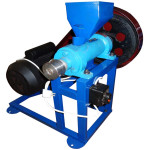
Animal feed harvesting heavily depends on weather conditions, machinery, and other external factors. However, we can eliminate certain risks to ensure the quality of the compound feed does not suffer. After all, it is very important for buyers that all nutrients are preserved in the finished product, as the condition of the animals depends on it. Thus, so that the compound feed production process is not in vain, an extruder was developed that protects the feed by neutralizing it. Now you can find such an extruder whose technical characteristics will suit your calculations. Let's consider what an extruder is, how to choose a suitable extruder, and what the advantages of extruded feed are.

How an Extruder Works and Its Main Advantages
Due to barothermal treatment, all toxins present in the grain are inactivated, and the grain sterilization process takes place.
Extruded feed allows you not only to save money but also to increase sales revenue, because such a product is of interest to everyone who needs carbohydrates for animals. Wheat, barley, oats, corn, and other grains are often used in the composition of compound feed (sometimes legumes such as peas, soy, lentils, and others can be used). Grain feeds are supplied in the form of a mash, which also includes flour. And this is where the most dangerous thing can happen – the formation of mold and aerobic bacteria due to high grain moisture. To avoid this, many turn to extruded feed, which is safer.
Regarding the advantages, several points should be highlighted. The first plus is the taste qualities of the product. Due to processing under high temperature, the taste of the feed improves, aromatic substances are added, and ultimately, the feed is easier for animals to digest.
Another advantage is, of course, sterility. Extruded feed can be stored for a long time in ordinary warehouses. If the feed is bought for young animals, the owner does not have to worry about the future condition of the animal, since when using an extruder, the level of intestinal diseases decreases several times.
How an Extruder Works
Grain is fed into a special hopper attached to the equipment itself. Thanks to vibrations, all the grain is transferred to the next point – the working area, where three-phase processing takes place. In this process, there is no need to pre-steem or subject the material to any other processing beforehand.
After the grain undergoes thermal processing (usually the temperature reaches 165 degrees and the pressure is 50 atmospheres). As soon as the grain is ejected from this compartment, the pressure drops sharply, and all the water that was previously in the cells evaporates, which leads to an increase in volume. Thus, the grain swells, its structure changes (it becomes more porous). The next step is extrusion through a shaping tool, resulting in an expanded strand that resembles a harness in shape. The whole process takes less than a minute, so the extruder device does not consume much energy while having a sufficiently high productivity.
You can find a feed extruder or buy grain crushers in our store, where they will help you with your choice.
21/01/2022