
 UKR
UKR RU
RU SK
SK


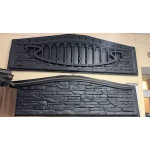
Fence molds — these are indispensable tools for creating concrete fences in homestead plots, private houses and public areas. With their help, you can easily make decorative and durable fences that will emphasize style and protect the territory.
Why is it important to choose quality molds for fences?
Fences perform not only a protective function, but also a decorative one. Therefore, it is important that they are reliable, durable and aesthetically pleasing. High-quality molds for fences allow you to get clear, even and beautiful fence elements that do not require reworking after pouring concrete.
When choosing molds, it is important to consider a number of factors that affect the quality of the final product:
- Material molds
Plastic. Plastic molds — the most popular on the market due to their lightness and affordable price. They are suitable for mass production and are also easy to use.
Silicone. Silicone molds have excellent flexibility, which allows you to create molds of complex reliefs. They are durable and easy to use, but usually cost more than plastic analogs.
Metal. Metal molds — this is the most reliable and durable option. They are ideal for large projects.
- Thickness and strength
The mold should be thick enough to withstand the pressure of concrete and not deform. The optimal thickness of plastic molds — 2 to 3 mm. The thicker the mold, the stronger and more durable it is.
- Smoothness of the surface
The smooth inner surface of the mold guarantees a smooth and clean product, without unnecessary defects. This is especially true for plastic and silicone molds, where any irregularities can remain on the finished product.
- Resistance to the environment
If you plan to work outdoors, choose molds with protection from ultraviolet light, moisture and temperature fluctuations. Metal molds are usually coated with an anti-corrosion coating, while plastic molds — with special additives that increase their resistance.
Basic types of fence
- Classic molds for the fence
These are simple rectangular or square shapes that create the elements of a standard fence. - Decorative molds
These molds allow you to create unique patterns and textures on the surface of the fence. Decorative elements can be either on the entire surface of the mold or in individual parts. - Column molds
These molds are used to create columns that are used as fence supports.
Tips on how to care for fence molds
Even the best quality molds require proper care. Here are a few tips on how to extend their life:
- Regular cleaning
After each use, the mold should be cleaned of concrete residue. This is especially important for molds with complex patterns. - Grease before pouring
Before pouring concrete, it is recommended that the mold be treated with grease or special products for easy removal of the finished product. This will help prevent the concrete from sticking and make it easier to remove the mold. - Proper storage
Store the molds in a dry and sunlight-protected place. This is especially important for plastic and silicone molds.
Choosing quality fence molds — a guarantee that your fences will last a long time and please the eye. Pay attention to the material, thickness and durability of the mold, and follow simple maintenance rules.
11/11/2024